



Who Is Drew Binsky?
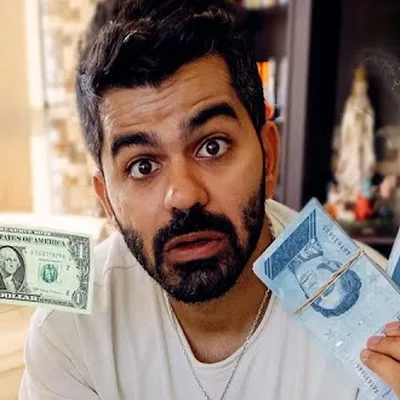
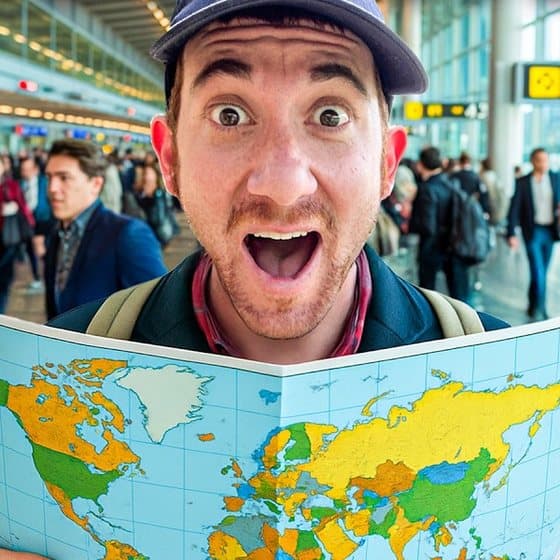
Drew Binsky is an American travel YouTuber from Scottsdale, Arizona, and one of the few people alive who has been to every country in the world. He counts 197: the 193 members of the United Nations plus Kosovo, Palestine, Taiwan and the Vatican. He crossed into the last one, Saudi Arabia, at half past one in the morning on 29 October 2021, almost ten years after a student semester in Prague got him started.
These days he makes documentaries about the oddest corner he can find: a man in Vietnam who says he hasn't slept since 1962, cage homes in Hong Kong, a tunnel in Manila where families live. Lately it's the poorest towns of his own country, from Appalachia to the Las Vegas storm drains. Since September 2026 a selection of the documentaries has been on Netflix as well.
The first thing to know about Drew is that he loves everywhere. Iran is his absolute favourite country in the world. So is the Philippines. Venezuela is his favourite country in South America, except in the Snake Island video with MrBeast, where Brazil is “easily my favorite country in South America.” He hands out favourites the way a grandmother hands out butterscotch: to whoever happens to be in the room.
I'm in no position to judge. I have told every Spanish city I've ever visited that it was my favourite, mostly so the waiter would bring the bread.
What Is Drew Binsky's Real Name?
Drew Goldberg. Binsky was a family nickname on his German-Jewish side, and it became his name on YouTube. He grew up in a Reform Jewish family and had his bar mitzvah at Temple Chai in Scottsdale. In Vienna he went to see the house his grandfather was born in, and at the shrine in Karbala, Iraq, he told his viewers, “guys, I'm Jewish,” and that he respected the faith of the people around him.
Even the short name gives him trouble. In Kentucky a man called Andrew Jones drove him round in his pickup, and Drew told him that everybody thinks his own name is Andrew when it's just Drew. He has been to all 197 countries and still can't get Americans to say his first name, which is a bit like climbing Everest and then tripping over the doormat at home.
Where Is Drew Binsky From?
Scottsdale, Arizona, where his old university magazine says he was a kid who loved geography. At his wedding his family told the guests he grew up with a “fear of everything.” As an adult he walked into gang territory in Port-au-Prince with a camera, which is the most extreme case of facing your fears since my aunt took up skydiving after her divorce.
Arizona is still his yardstick. In a town in Alaska he worked out that groceries cost two and a half to three times what they cost at home, and in the wettest city on the planet, in India, he explained to the locals that he comes from a very hot desert. In his wedding video he listed the places he and his wife have made a home: Hanoi, Bangkok, Manila, Prague, California “and now Arizona with our little pug.” Most people's list of old addresses fits on a form. His needs a second form, and the pug needs a passport.
What Did Drew Binsky Do Before YouTube?
He studied economics and entrepreneurship at the University of Wisconsin-Madison, graduating in 2013, after turning down a full scholarship at the University of Arizona. He gave up a free degree in the sunshine to pay for one in the snow, which was the first sign he would never be normal about money or weather.
The semester that changed everything was in Prague, starting in January 2012. He has said it kicked off the travel bug, and that is where his count of countries begins. From Prague he went to Barcelona for a weekend, though in his words he “may have had too many sangrias that weekend to remember much.” After graduating he taught English in South Korea on $2,000 a month with free housing, and he still speaks Korean. He wrote a travel blog called The Hungry Partier, and in 2016 he was paid $5,000 to make Snapchat stories at the Rio Olympics. He spent three and a half months in Brazil that year and filmed nothing, because he didn't own a camera.
His girlfriend, Deanna, fixed that. She gave him a camera on New Year's Day 2017 in Hanoi, and his first video was about what $10 buys you in Vietnam. Then came the hard part. “My first 300 videos, I didn't make a penny,” he told CNBC. Three hundred videos for nothing is a level of commitment I have only ever shown to a Duolingo streak, and mine also paid nothing.
How Did Drew Binsky Visit Every Country?
One at a time, over almost ten years, and some doors took more knocking than others. For Venezuela he spent five weeks straight meeting Venezuelan diplomats at their embassy in Manila before they gave him a visa. In Ecuador he had once spent a night on the floor of the airport during a layover with Deanna, and he refused to count it. Monaco counts, though he never slept there, because you can walk across the whole country in a day.
His last six were Ghana, Ecuador, Venezuela, Palau, Jamaica and Saudi Arabia. He landed in Jeddah at 1:30 in the morning, told the camera “I'm literally shaking right now,” and thanked Deanna for believing in him. By his own count it was about his 1,500th flight. The next day he was on CNBC, Bloomberg and the Today Show.
Getting there nearly killed him more than once, and he made a video counting the times. In India in 2015 his overnight bus flipped and two people died. His mother told him to get on the next plane home, and a week later the Nepal earthquake shook his plane as it sat on the runway in Delhi. In Chad in 2019 his motorbike taxi turned out to be stolen, the police gave chase, and Drew reached over the driver's shoulder and pulled the brake himself. The same trip ended with him stepping in what he called a massive pile of human poop outside a shisha bar, and he booked a flight out the next day. In February 2022, at the Russian border town of Khasan near North Korea, border guards strip-searched him under a big picture of Putin and had him sign about 30 pages.
He ends that video with, “I hope you learned not to be as stupid as me when you travel.” From a man who has seen every country, that's humble. From the man who braked a stolen motorbike during a police chase, it's an understatement.
Who Is Drew Binsky's Wife?
Deanna Sallao, who was born and raised in the Philippines. They met at a travel expo in Bangkok in 2015, she bought him his first video camera, and they married on Valentine's Day 2023 on Balesin, an island resort in the Philippines that he said had to be booked two years ahead. Before the wedding he did the pamamanhikan, the Filipino custom where the groom and his family formally ask the bride's parents for her hand. At the ceremony they broke a glass and danced the hora, which is how you get a Jewish wedding onto a Catholic island without anyone calling the Pope.
The wedding video is the most human thing on his channel. The groomsmen's trousers turned out to be cut for 12-year-olds. His mother bought everyone shots of Patrón, and the group finished the bottle. And his vows were a list of real sacrifices: to put their breakfast dates ahead of golf, to let her cook stinky fish in the house, and to go with her to Taylor Swift and Beyoncé concerts. This from a man who says he has played golf in more than 40 countries. Anyone who has lived with stinky fish frying in a small kitchen knows which promise was the big one.
By 2026 they had been to 117 countries together, and that year he took her to Iraq. Her expectations were low: “I thought it was like a war-torn country.” He came home calling Baghdad a top 10 city in the world, which brings his list of favourites to a number I have stopped counting.
Who Pays for Drew Binsky's Trips?
He does, mostly, and his sponsors pay him. “I come out of pocket and pay for almost everything, except with tourism boards,” he told CNBC in 2021. In the same interview he said brands paid $15,000 to $30,000 for a sponsored video, and that he also earned from merch and $150 travel-hacking courses, with a team of about 23 people.
Revolut, the money app, is “a long-time partner of this channel.” In his eastern Kentucky video, Revolut has over 65 million users and gives new ones a $20 bonus. A few months later, in rural Virginia, it has over 70 million and the bonus is $40. Somewhere on the road from Kentucky to Virginia, Revolut picked up five million customers and doubled its welcome gift. My bank has never doubled anything for me except the fees. In the Manila tunnel video he reads an ad for Nutrafol hair supplements and admits that “as I get older, I'm noticing my hair thinning.” He has conquered every country on Earth, and his hairline is the one border still moving. I know the feeling, Drew. I own nine caps.
The rest of the money comes from Drew himself. He sells Just Go merch, the travel-hacking course, an “exclusive travelers club” and once an NFT collection called Travel Tokens. His book, also called Just Go, came out in May 2024, and in 2026 he signed a nonexclusive deal that put his documentaries on Netflix the same day they go up on YouTube.
Some access he buys on the spot. In Cité Soleil, the Haitian slum, he put $100 in a gang leader's hand and got six more bodyguards. Telling the story again later, he said he had to hand a gang chief about a thousand dollars and then pay him more. Six bodyguards for a hundred dollars is still the best bargain on his channel, and he has a whole series about what $10 can buy.
Are Drew Binsky's Video Titles True?
Partly. The title is the trailer, and the video usually tells you what the trailer left out. His most watched video is called “He Hasn't Slept Since 1962 (Doctors Don't Know Why).” No doctor appears in it. The hospital, the translator reports, doesn't know. Asked when he last slept, the man says it's been a long time and he can't remember, and when he drinks a lot he sleeps for an hour or two. Drew stayed the night to watch him and admitted, “I may or may not have fell asleep a little bit in the house. Just so tired. But... I woke up and he was gone.” His conclusion: “both yes and no.” So the only person in the video proven to have slept is Drew.
“Visiting the Tribe that EATS HUMANS” is about the wrong tribe. “I was misled here by Martin, but I decided to stay,” he says, and the guide tells him this tribe never ate anyone. On the hunt they were after “worms, vegetables. Mushrooms.” He flew to Papua for cannibals and found a foraging trip, which is like booking a shark dive and getting the aquarium gift shop. On Snake Island with MrBeast, the report from the field was “So far we've been attacked by more caterpillars than snakes.” The world's tallest humans were promised at 7.5 feet, and the tallest height anyone gives on camera is 225 centimetres, about 7 foot 4. And “Inside the Secret Bubble of Venezuela's Ultra Rich” contains a sushi bar, a mall and a hotel whose security wouldn't let him in. No ultra rich person says a word.
In fairness, he tells you all of this himself. The wrong tribe, the caterpillars and his own nap are in the videos, not dug up by critics. The titles are written for the algorithm and the videos for the people who click.
What Has Drew Binsky Filmed in Latin America?
All of it, country by country, and his best material there is about money. Venezuela was his 194th country and the last in South America, and he spent two weeks there with a Venezuelan YouTuber, Emmanuel, and his friend Gabo on camera. They hired an undercover policeman as security. The bolívar had collapsed so far that he paid for a $2 motorbike ride by grabbing about three million bolívars without counting, and a road toll came to three cents. He set out to change $100 into cash and gave up after three or four places with $62 in a bag so full of notes it wouldn't close.
In the slum episode he shared a lesson from his travels: “there is an indirect correlation between money and happiness. Put, in other words, being rich doesn't always equal happiness.” He meant an inverse correlation, and this is a man who told viewers he has an economics degree. In the next episode he spent $98.84 on two rolls of sushi and two drinks, played golf, paid $30 for two cocktails and then complained at the cable car, where foreigners pay $20 and Venezuelans $3: “How is that fair?” It's fair because you just ate a hundred dollars of sushi, Drew.
In Cuba the immigration police took his drone at the airport and held him more than two hours while an officer spent an hour and a half writing ten pages about it. Later in the trip, standing in an empty square that he said had Pyongyang vibes, he decided, “I don't feel surveillance though.” He did get the drone back. He also told viewers, “The food in Cuba is not all that great, which is why there hasn't been any food content in this video,” which is the gentlest one-star review ever written.
In Mexico he went to the town in Chiapas where people drink so much Coca-Cola that it's part of church ritual. The video is called “Coca-Cola is Killing Thousands in This Mexican Town,” and in it Drew says an ice-cold Coke gives him “the subconscious feeling of being home” and swears it tastes better in Mexico. Joe HaTTab went to the same town after five years off soda and relapsed on camera. Drew never quit in the first place. He also tried to live on Bitcoin for 48 hours in El Salvador. He paid for his visa, the first thing he bought, without it, and the challenge ended with two Quarter Pounders at McDonald's. He says he has eaten at McDonald's in 77 countries, so whatever else changes on his trips, lunch is safe.
Does Drew Binsky Speak Spanish?
A little, and less than he says. The Jewish Journal listed Spanish among his languages in 2024, and in his video from Zamboanga, the Philippine city that speaks a Spanish creole, he called himself “a Spanish speaker myself.” On camera in Latin America he works through friends. His setup in Venezuela was “I'm going to say in English, then you translate,” and in Mexico and the Dominican Republic he has friends ask the questions. His own Spanish is the airport kit: gracias amigo, perfecto, vamos, hasta luego. Korean he speaks for real, from his years teaching there.
His best Spanish is a short clip from Equatorial Guinea, Africa's only Spanish-speaking country, which opens with “Buenos días” and “mi país número 148” and explains that he's speaking Spanish because the people there do. His most memorable is from El Salvador, where he asks shopkeepers whether they take Bitcoin. His “¿Aceptan Bitcoin?” came out so close to English that the automatic captions wrote it as “Except on Bitcoin?” four times.
The translations are where it wobbles. In Caracas he told viewers that guanábana is called “guaynabo” in other countries. Guaynabo is a city in Puerto Rico. The fruit is soursop in English and guanábana nearly everywhere that speaks Spanish. In Paraguay he described tereré as “like a green tea,” when it's yerba mate in cold water, which every Paraguayan will tell you is a different thing, at length, without being asked. And after two weeks in Venezuela, his goodbye to Emmanuel was “Sempre, amigo. Chao.” Sempre is Portuguese, and Italian. In Spanish it's siempre. Two weeks in a Spanish-speaking country, and his farewell opened in Portuguese, like a man who walks out of a taquería saying arrivederci.
I can't laugh too hard. My first week in Spain I ordered “un vaso de leche” at a bar at eleven at night because it was the only drink I could pronounce. If his trips make you want to follow the conversation instead of the translator, my guide to Mexican slang and my ranking of the best Spanish apps are good places to start.
What Are the Criticisms of Drew Binsky?
Three come up in the press: his guides in Syria, his videos from Afghanistan, and the question of who gets exploited when he films people who live hard lives. I'm reporting them as the outlets wrote them, and noting what I couldn't check.
Syria first. In March 2023 France 24 Observers ran a report on Western YouTubers who film in Syria with state-licensed guides, titled “How ‘apolitical’ Western Youtubers help push Syrian propaganda.” It says that “in 2019 and 2022” Drew and another American vlogger “were accompanied by” an agency called Golden Team Tourism, and that “some of these guides are allegedly connected to the Syrian government.” The report does not say his guides were. France 24 says it contacted every vlogger it named and only two agreed to talk, and Drew was not one of them. In 2024 New Lines Magazine wrote that he had rejected such accusations, “insisting that his trip to the country was independently planned and funded,” and reported his claim that since his 2019 trip he has been blacklisted and unable to get a visa. That claim doesn't square with France 24 placing him there in 2022, and I couldn't settle which is right.
Afghanistan next. In August 2021 BK Magazine in Bangkok ran an opinion piece by Craig Sauers arguing that YouTube videos made for clicks “are little more than travel porn.” On Drew, it said that “he smokes hashish with local youth, writing off a gratuitous act as a cultural experience.” I found no reply from him.
The third one he raised himself. In 2023 he filmed Hasidic Brooklyn with Abby Stein, a transgender activist who left the community, and told the New York Jewish Week that he knew it would be controversial. Asked whether he was exploiting the community, he said, “Am I ‘exploiting’ them? Yes, to some degree,” and that he still felt he had to do it as part of his mission to tell the story.
The same question hangs over his American videos. In eastern Kentucky he asked two different locals whether the incest rumour about the state was true, and he took a man named Jeff to be high until his guide explained Jeff has a mental disorder. In West Virginia a local told him that outsiders “pick the lowest of the low” to film. The generosity is on camera too. He gave the man who doesn't sleep $500, bought $286 of groceries for a family in Alaska, and in the Manila tunnel he handed out $1,000 of gifts and food that he said came from his own pocket.
Should You Watch Drew Binsky?
Yes, if you want to see how far one person can go. Nobody else on YouTube can take you from a jail in Alaska to a bakery in Caracas to a wedding on a Philippine island, and he's good company: he laughs at himself, he admits the wrong tribe, and he tips. His big message, printed on his shirt, is that we are all the same, and plenty of his videos back it up with a stranger who won't let him pay for dinner.
Read his titles the way you read a property listing. “Cosy” means small, and “the world's most dangerous slum” means a daytime walk with a man who grew up there. If you like his America videos, my profile of Peter Santenello covers a man who was filming small-town America before Drew got there, and Indigo Traveller goes to the places the headlines warn about.
Sources
42 links
Quotes from his videos come from the channels' captions, most of them automatic. Where the automatic captions mangled a word, I checked it against the video's context.
Press
- On Wisconsin (University of Wisconsin alumni magazine), “Where in the World Is Drew Binsky?”, Fall 2022
- The Times of Israel (JTA), on the Jewish travel blogger closing in on every country, January 2020
- CNBC, on his career choice, March 2019
- CNBC, on how he got paid to travel the world, November 2021
- The Asian Age, on his blog and the world map, January 2019
- Matador Network, on reaching Saudi Arabia, his 197th country, January 2022
- Philstar Life, on his wedding to Deanna Sallao, February 2023
- New York Jewish Week (JTA), Julia Gergely, on his Hasidic Brooklyn video, March 2023
- Jewish Journal, on his book Just Go, June 2024
- Penguin Random House, Just Go (BenBella Books, 2024)
- Net Influencer, on his Netflix deal, September 2026
- France 24 Observers, Mahmoud Naffakh, “How ‘apolitical’ Western Youtubers help push Syrian propaganda”, March 2023
- New Lines Magazine, Nour Idriss, “Inside Syria's YouTube Scene”, October 2024
- BK Magazine, Craig Sauers, opinion, “Travel blogger misses the mark in Afghanistan controversy”, August 2021
His videos
I Traveled ALL 197 Countries! Here's What It's Like! · I Finally Made it to Every Country in the World!!! · $10 Challenge in Saudi Arabia (My Final Country!) · 5 Near Death Experiences (After Visiting Every Country) · I Got Married 8,000 Miles Away From Home · I Brought My Wife To Iraq (Worst Idea Ever?) · He Hasn’t Slept Since 1962 (Doctors Don’t Know Why) · Visiting the Tribe that EATS HUMANS (Papua Island) · Surviving 24 Hours On Snake Island With MrBeast · I Met The World's Tallest Humans (7.5 Feet) · I Spent a Day in Haiti's Most Dangerous Slum · I Found A Tunnel Where 100 Families Live (Philippines) · This American Town Is 36 Miles From Russia · What It's Like in America's Poorest Region · This Is The America You Never See (Rural Virginia) · I Went To Eastern Kentucky (America's Poorest Region) · 2 WEEKS IN VENEZUELA (full documentary) · I Tried to Exchange $100 in Venezuela. I Failed. · I Visited World's Most Dangerous Slum (in Venezuela) · Inside the Secret Bubble of Venezuela's Ultra Rich · This Country is Trapped in the 1950s (Cuba) · Coca-Cola is Killing Thousands in This Mexican Town · Surviving on BITCOIN for 48 Hours in El Salvador · Can I Survive 24 Hours in the Amazon? · Entering Asia's Only Latin Town (They Speak Spanish) · Entering Africa's Only Spanish-Speaking Country (Crazy) · $100 Challenge in Barcelona in 24 Hours · Inside Paraguay | A South American Mystery